
From chaos to clarity: building a UX Process for enterprise practices
Tags:UX process, UX Enterprise
Time: 2022-2025
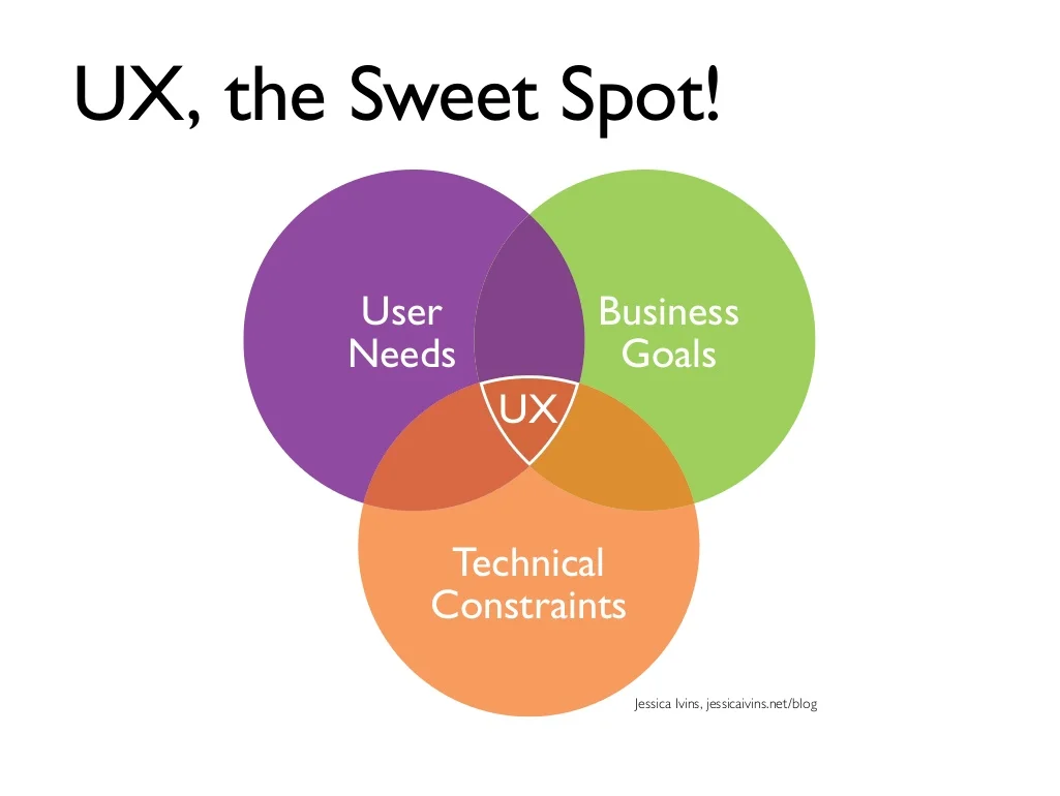

A Maze of Tools, Opinions, and Assumptions
When I first stepped into enterprise design, I quickly learned something no one warns you about:
chaos is the default.
Not because people are unskilled, or because teams don’t care — but because enterprise environments grow over time, shaped by years of decisions, legacy tools, shifting ownerships, and “temporary solutions” that become permanent.
Here is what we were before:
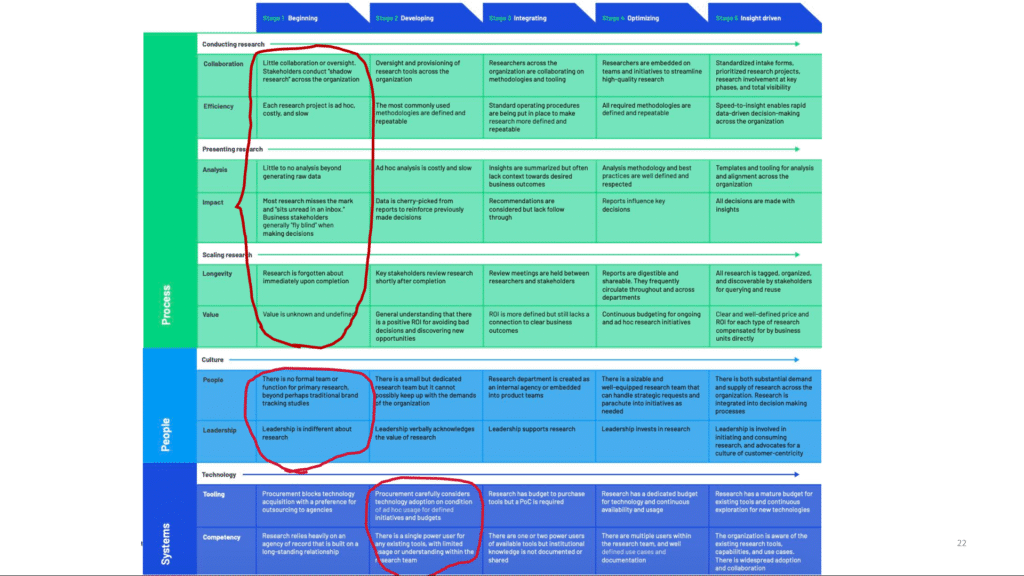
In this landscape, UX is often misunderstood as visual polish rather than strategic clarity.
But the truth is: building a UX process is how we bring order to complexity.
This is the story of how I built (and continue to evolve) a UX process that brings predictability, alignment, and direction into a highly technical enterprise environment.
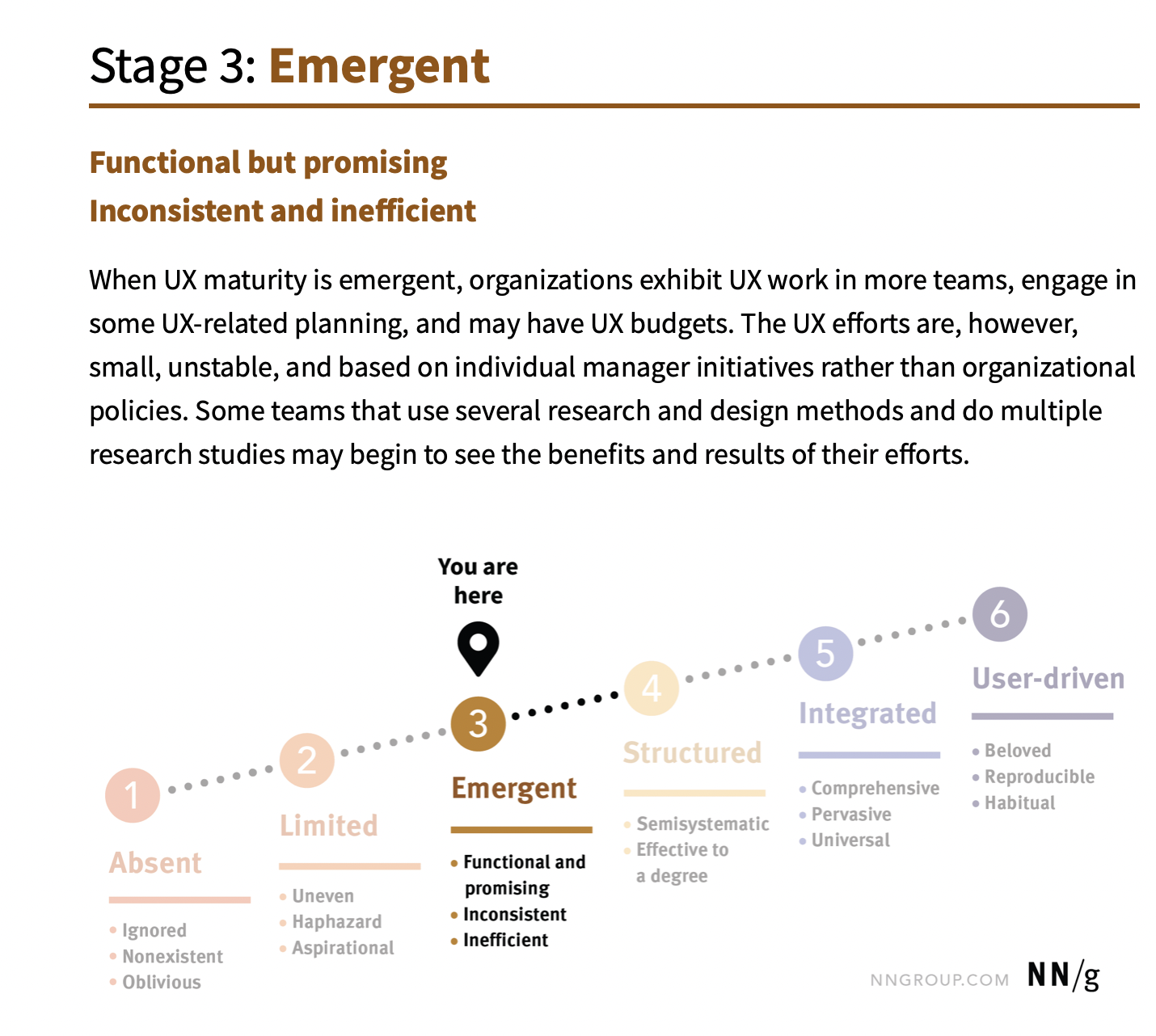
And below is our result from Nielsen Norman Group UX Maturity Model.
Disclaimer Notice:
This article has been anonymised to comply with confidentiality obligations under Company’s Promise of Secrecy. Product and system names have been generalised, and visuals have been recreated for illustrative purposes only.
The Starting Point
Enterprise teams usually work in discipline silos — engineering, domain experts, developers, product owners — each with their own language, habits, and mental models.
When I arrived, every project started differently:
-
Some teams jumped straight into UI mockups.
-
Some expected pixel-perfect screens before requirements existed.
-
Some believed UX was “making it pretty.”
-
Others weren’t sure why UX was even in the room.
Designers were reacting instead of leading. It was obvious that before improving any product, we needed to improve how we work.
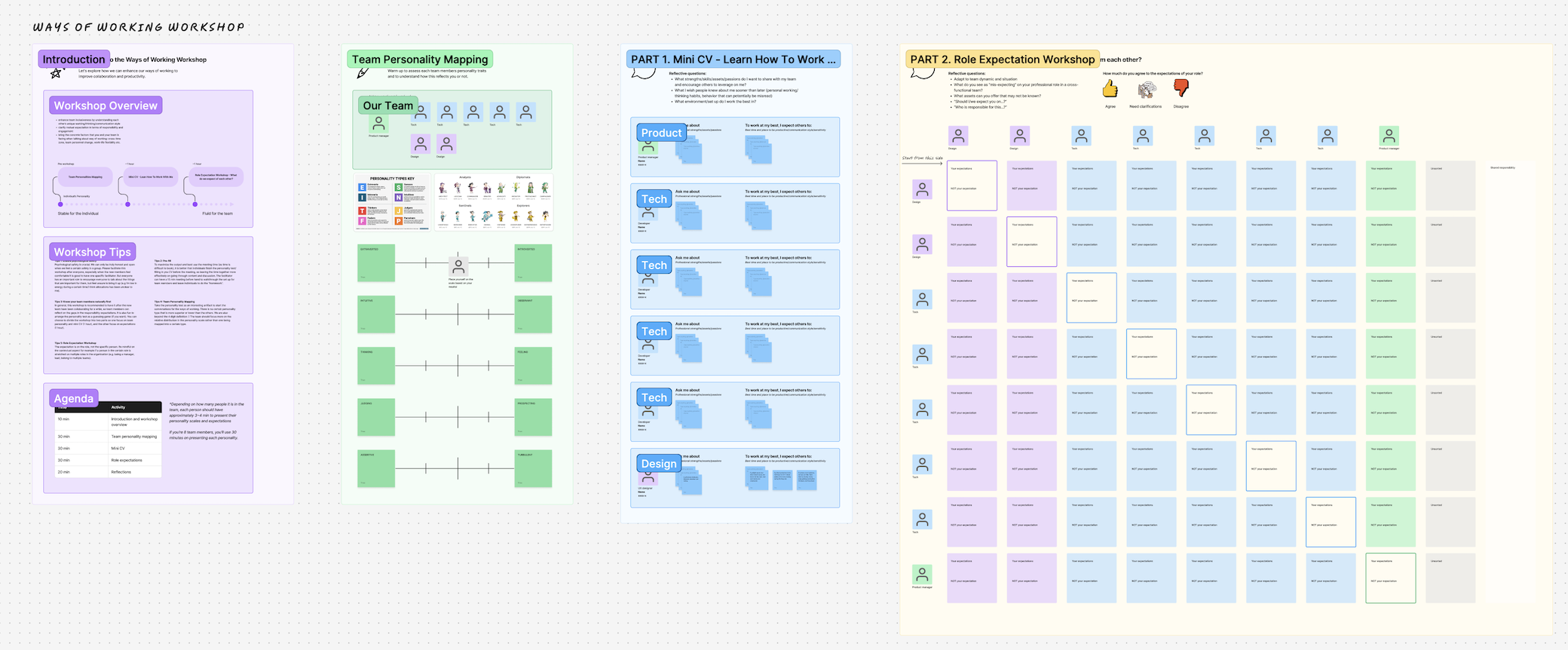
Enterprise UX — making process understandable
One of my first major talks was “Enterprise UX Workflow.” It started as a personal mission to help teams understand what UX truly brings to large-scale, technical environments.
I spoke about the reality behind the buzzwords — the human side of UX in enterprise settings, where collaboration can be tangled, and assumptions often stand in the way of progress.
I explained the full process — from discovery and research to validation and rollout — and emphasized that UX isn’t decoration; it’s direction.
After the talk, engineers and managers told me they finally understood why UX was part of their process, not an extra step. For me, that feedback was a quiet victory — proof that empathy and clarity could create alignment where meetings once created confusion.
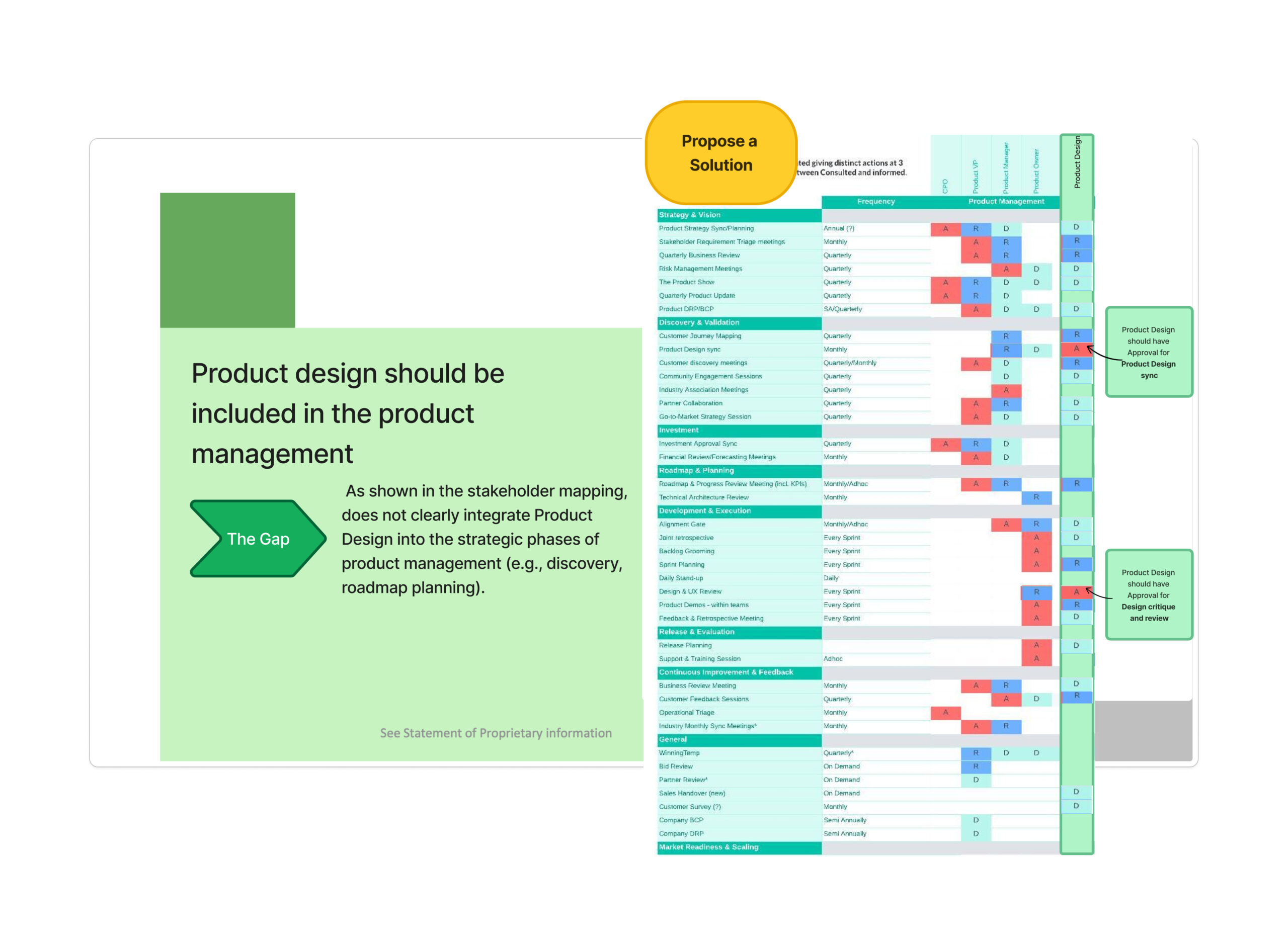
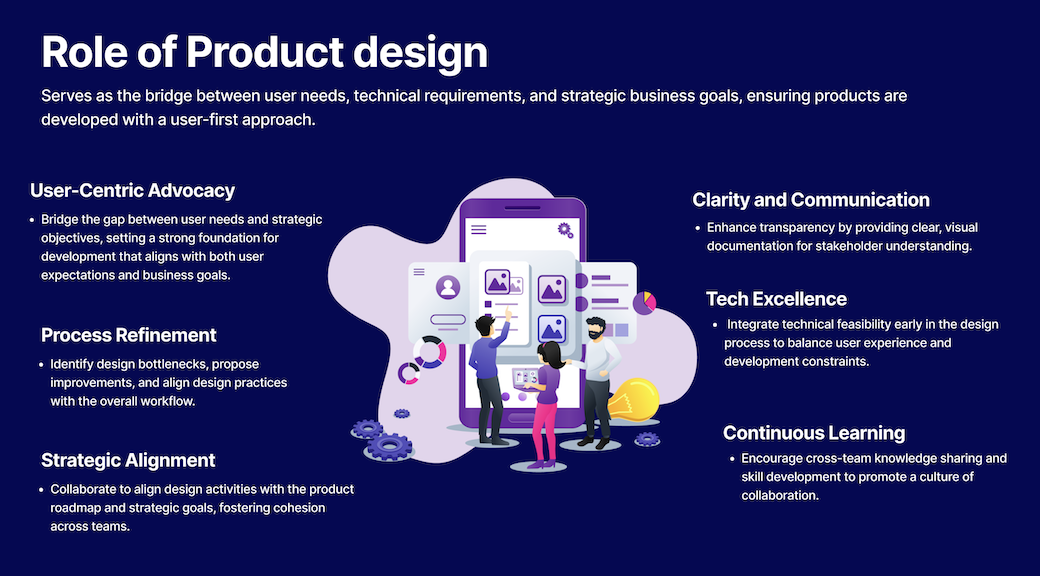
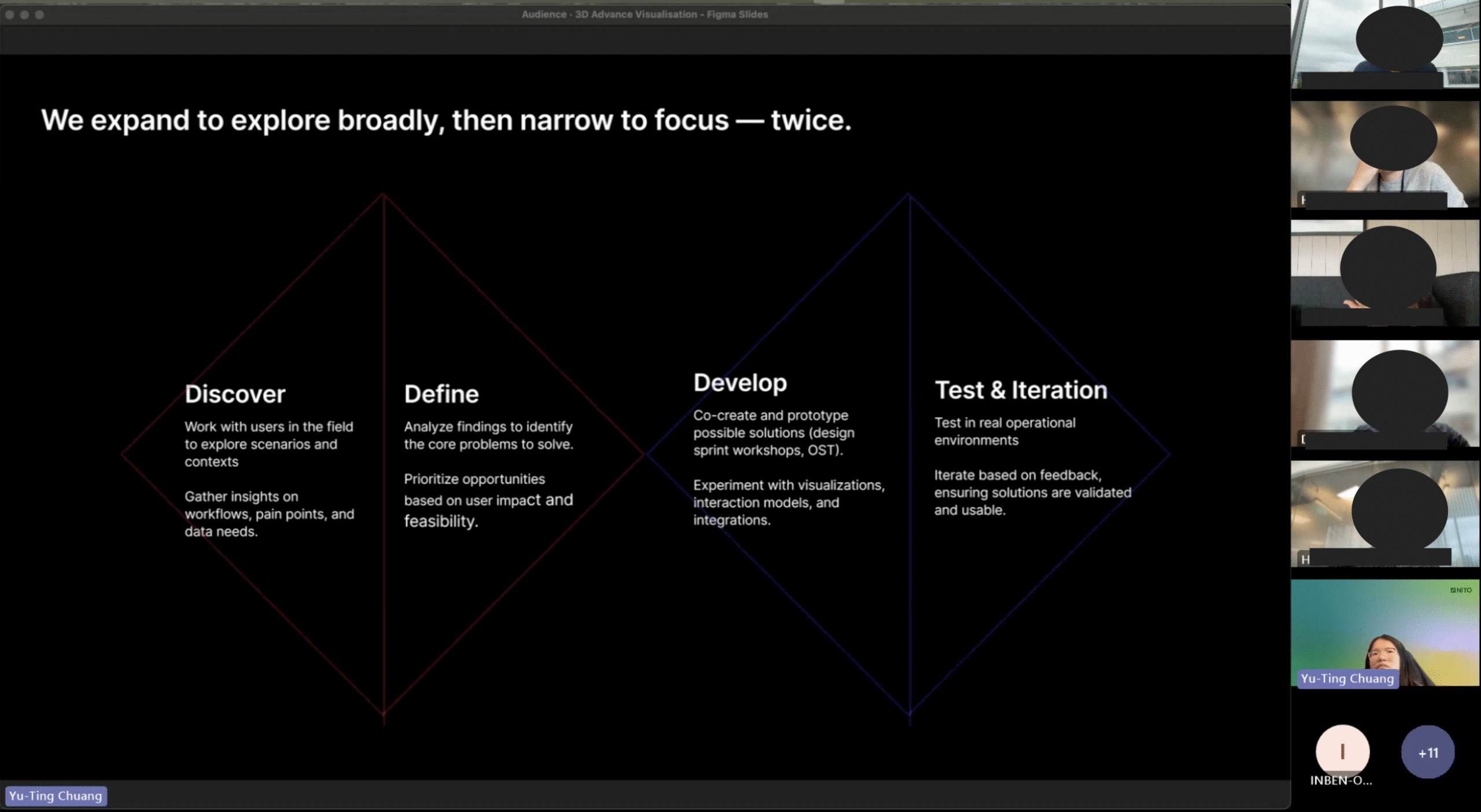
Part Presentation Slide:
Turning Point: Creating Shared Understanding
The first step was deceptively simple:
Define what UX is — for us.
I started hosting sessions, onboarding talks, and internal workshops to explain:
-
what UX contributes
-
how UX fits into engineering
-
where design decisions come from
-
what a healthy process looks like
-
how cross-functional teams can participate
These weren’t lectures — they were conversations.
I asked teams:
“What do you think UX does?”
“What frustrates you in our current way of working?”
“What would you love to have but don’t?”
The answers became the foundation of our new workflow.
Building the Process: Clear, Repeatable, Human
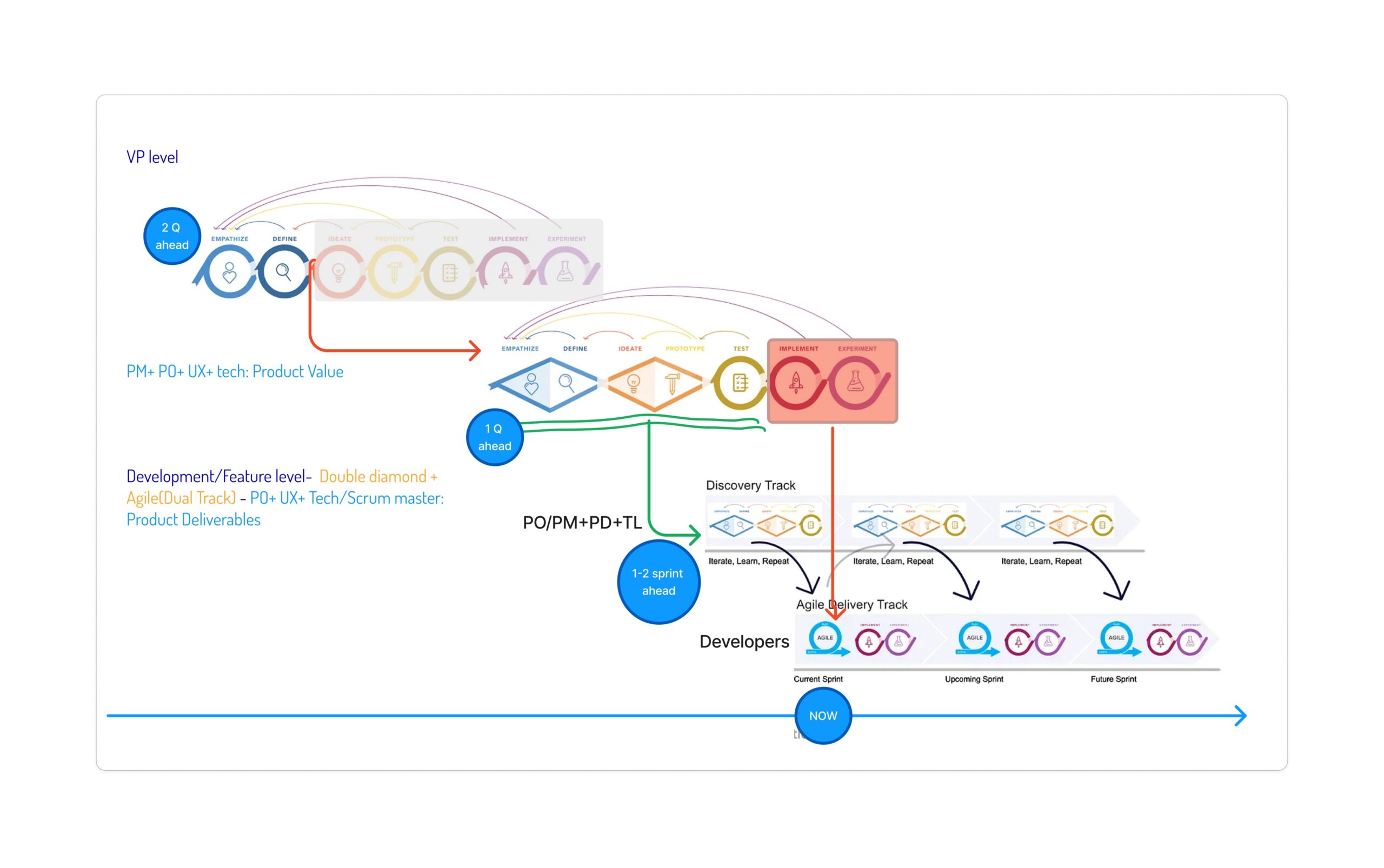
One of the biggest breakthroughs in our process transformation was moving from ad-hoc, reactive design work into a Dual-Track Agile model where UX is not an afterthought — but an active, continuous engine.
The diagram above represents the system I introduced: a synchronized workflow connecting VP-level strategy, product definition, UX discovery, and engineering delivery.
It brings order to uncertainty by ensuring that UX is always ahead — never behind.
♦ Strategy Track (VP / PM / PO / UX / Tech) → “2 Quarters Ahead” — Defining Product Value**
This top-level track focuses on long-term clarity:
-
Market direction
-
Business outcomes
-
User value
-
Technical feasibility
-
Investment decisions
Here, UX contributes early insights, research framing, and risk identification, long before any screen is designed.
This is where the team asks:
“What problem is worth solving?”
“Why now?”
“What value does this unlock?”
It ensures we aren’t designing features —
we’re designing product direction.
♦ Discovery Track (PO + PM + Product Designer + Tech Lead) → “1 Quarter Ahead” — Reducing Unknowns Before Building**
This is the “learning” side of Dual-Track Agile.
Here, UX runs:
-
contextual interviews
-
OOUX sessions
-
system mapping
-
task analysis
-
early concepts
-
user journeys
-
prototypes
-
validation loops
Design, product, and tech work together to answer:
“Can users do this?”
“Do we understand the workflows?”
“Do we know what good looks like?”
The goal is not to create final UI — the goal is to de-risk development.
♦ Delivery Track (PO + UX + Developers + QA + SM) → “1–2 Sprints Ahead” — Converting Clarity Into Shippable Work**
This is the “building” side of Dual-Track Agile.
Once discovery produces validated clarity, the delivery team can build with confidence.
UX stays involved through:
-
mid-fi → hi-fi UI
-
interaction design
-
specifications
-
component guidelines
-
edge-case support
-
dev check-ins
-
QA reviews
Developers finally receive clear, validated, feasible workflows, not vague wild guesses.
As a result:
-
fewer reworks
-
fewer handover gaps
-
fewer misaligned expectations
-
more predictable velocity
Continuous Alignment — The Real Secret
In an enterprise environment, the biggest risk is not bad design — it’s teams drifting away from each other.
This model ensures:
🔹 Leadership plans ahead
🔹 Product shapes value
🔹 UX reduces risk
🔹 Engineering delivers predictably
All happening in parallel but connected.
Why This Matters
Before adopting this model, teams often felt:
-
unsure what UX was doing
-
unclear which problem they were solving
-
pressured to deliver features with incomplete context
-
overwhelmed by shifting priorities
After Dual-Track Agile + UX:
-
priorities became visible and predictable
-
UX gained strategic influence
-
developers finally got requirements they could trust
-
product decisions became evidence-driven
-
discovery and delivery moved together instead of competing
It transformed how teams communicate, plan, and build.
UX is Not a Step, It’s a Mindset
People often think UX is something designers “do.”But enterprise UX is actually something teams practice.
It’s:
-
shared understanding
-
structured thinking
-
prioritization
-
evidence-based decisions
-
making complexity digestible
-
guiding teams through uncertainty
-
turning technical depth into human clarity
And most importantly: UX is the bridge between how things are built and how people experience them. I didn’t set out to “build a UX process” — I simply wanted teams to stop feeling lost.
But over time, it became clear:
Process is how we turn chaos into clarity.
Process is how we scale good design.
Process is how UX becomes part of the organization’s DNA.
Building this framework took time, patience, and many conversations.
But today, it lets me — and the teams I work with — design with confidence instead of confusion. And in enterprise environments, that makes all the difference.

Object-Oriented UX (OOUX) for digital twins: insights to support scalable 3D view

Making 3D usable: OOUX finding from isolate & highlight features
Design insights: how users interact with Split Screen in digital twin

Designing SaaS for digital twin: how discovery shaped the solution
(47) 41 33 16 51
Reach Me By Phone
Email Me
Rølivegen 367, Steinkjer, 7718, Trøndelag
📍 Based in Norway