
Sharing UX Insights Through Talks and Events
Case Type: Public speech, Event.
Tags: UX, UX speech, onboarding, Breakfast Club
Time: 2022-2025
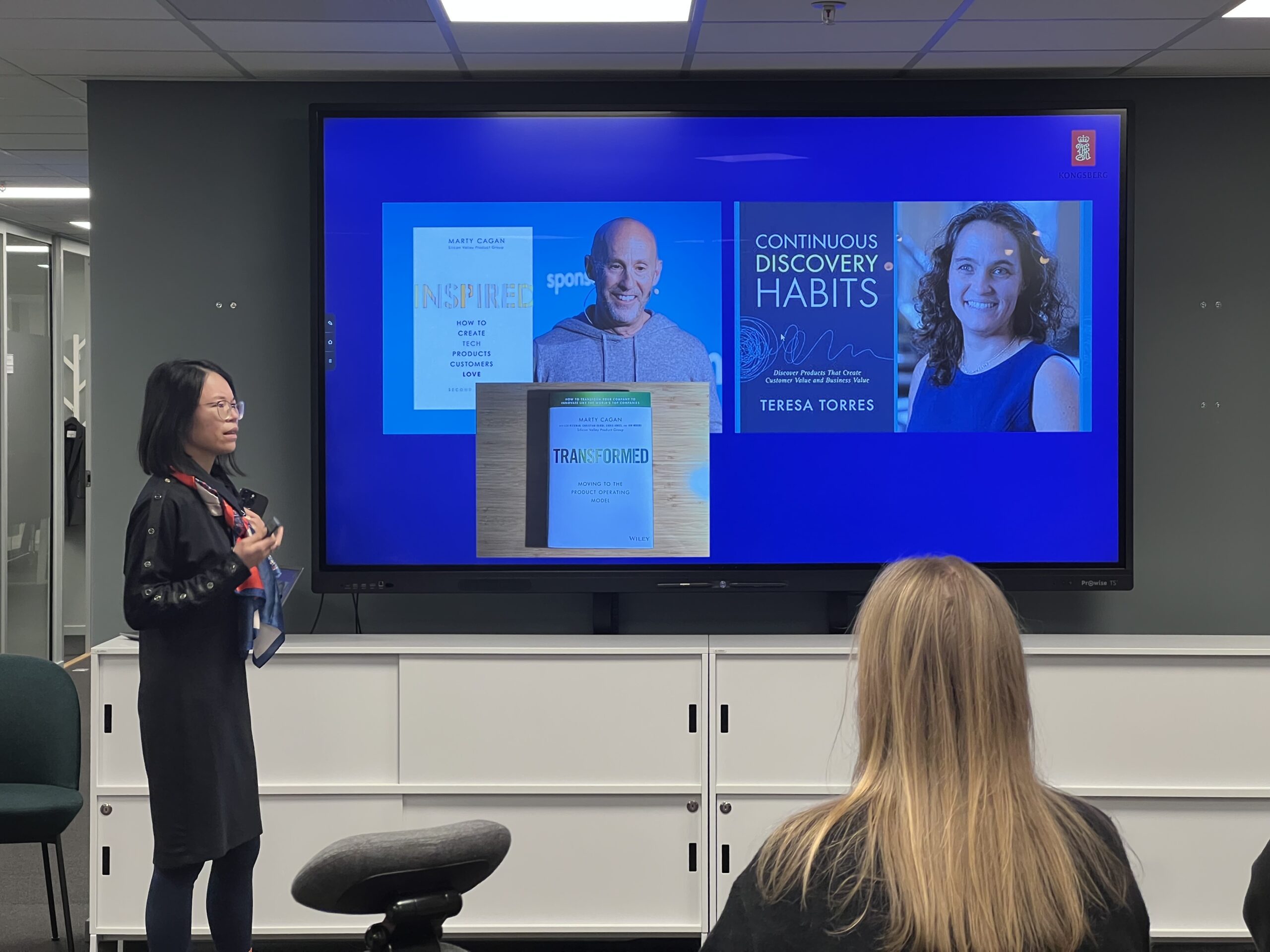

Finding My Voice
How Speaking Became Part of My Design Journey
I’ve never been the loudest person in the room.
I’m thoughtful, observant, and often prefer to listen first — to understand how people think before I speak. Even though I may appear outgoing, I’m actually an introvert at heart — someone who recharges in quiet spaces but feels deeply driven to connect when the topic truly matters.
For a long time, that quiet side of me felt at odds with the world of product design, where confidence and presentation often define how ideas are received. But as I grew in my career, I realized something: you don’t need to be naturally extroverted to make an impact — you just need the courage to share what you care about.
Public speaking became my way of challenging myself. Each talk I gave was a small step outside my comfort zone, but also a step toward becoming the kind of designer who not only builds good experiences — but also communicates them clearly and meaningfully.
Over the past few years, I’ve gone from quietly sketching ideas to standing in front of colleagues, executives, and cross-functional teams — translating complexity into clarity through storytelling.
Disclaimer Notice:
This article has been anonymised to comply with confidentiality obligations under Kongsberg Digital’s Promise of Secrecy. Product and system names have been generalised, and visuals have been recreated for illustrative purposes only.
Enterprise UX — making process understandable
One of my first major talks was “Enterprise UX Workflow.” It started as a personal mission to help teams understand what UX truly brings to large-scale, technical environments.
I spoke about the reality behind the buzzwords — the human side of UX in enterprise settings, where collaboration can be tangled, and assumptions often stand in the way of progress.
I explained the full process — from discovery and research to validation and rollout — and emphasized that UX isn’t decoration; it’s direction.
After the talk, engineers and managers told me they finally understood why UX was part of their process, not an extra step. For me, that feedback was a quiet victory — proof that empathy and clarity could create alignment where meetings once created confusion.
Part Presentation Slide:
Dev Night — Bridging Design and Development
At the end of 2024, I hosted a Dev Night session with 3 of my colleagues for engineers, tech leads, and product owners. My goal was to open up a conversation about what UX really means in daily collaboration.
I structured the talk around three key themes:
1. Design is not decoration — it’s communication.
I showed real product examples where early UX involvement helped developers make faster, clearer technical decisions.
2. Good UX empowers developers.
We discussed how UX documentation, naming conventions, and design systems can remove friction rather than add process.
3. Interaction Panel.
Through short interactive exercises, we explored how cross-functional teams can co-own usability outcomes,even in technical domains like complex industrial visualization tools.
The feedback was energizing , several developers shared that it was the first time they saw UX as a partner in problem-solving rather than a final step in the delivery pipeline.
This session reaffirmed one of my core beliefs as a designer: translating between disciplines is just as important as designing interfaces.
Enhancing Design with AI
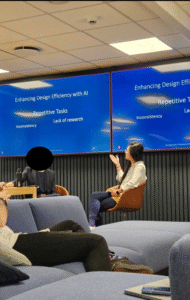 After earning my IxDF certificate in “AI for Designers,” I gave another Breakfast Club talk: “Enhancing Design Efficiency with AI.” This is a joint talk with my colleague.
In this session, I shared how I use AI tools in my daily workflow , not to replace creativity, but to extend it:
- Automating repetitive research documentation
- Exploring wireframe ideas faster
- Using AI to summarize stakeholder feedback or visualize early concepts
I framed the talk around human creativity, not technology — showing how AI can amplify, not overshadow, design thinking.
The most rewarding part wasn’t the slides, but the dialogue afterward. People from different departments — developers, analysts, product leads — joined the conversation, eager to share how they could apply AI in their own work.
That’s when I realized that good talks don’t end with applause — they end with curiosity.
3D Visualization — Turning data into stories
After joining the 3D visualization team, I learned how decades of industrial research have evolved into tools that help professionals make faster, safer decisions. I shared a case story about how our team collaborates with users and stakeholders early in the development cycle to create clarity through visualization.”
Standing on stage, I explained not just what the 3D team builds — but why it matters: turning massive technical data into human insight, also shared a case story of how we develop product and engage with user and stakeholders early on in the product development cycle.
The session became a bridge between engineering and design, helping both sides see how visualization supports trust, not just visual polish.
“Good visualization isn’t about making things look impressive — it’s about helping people see clearly enough to act.”
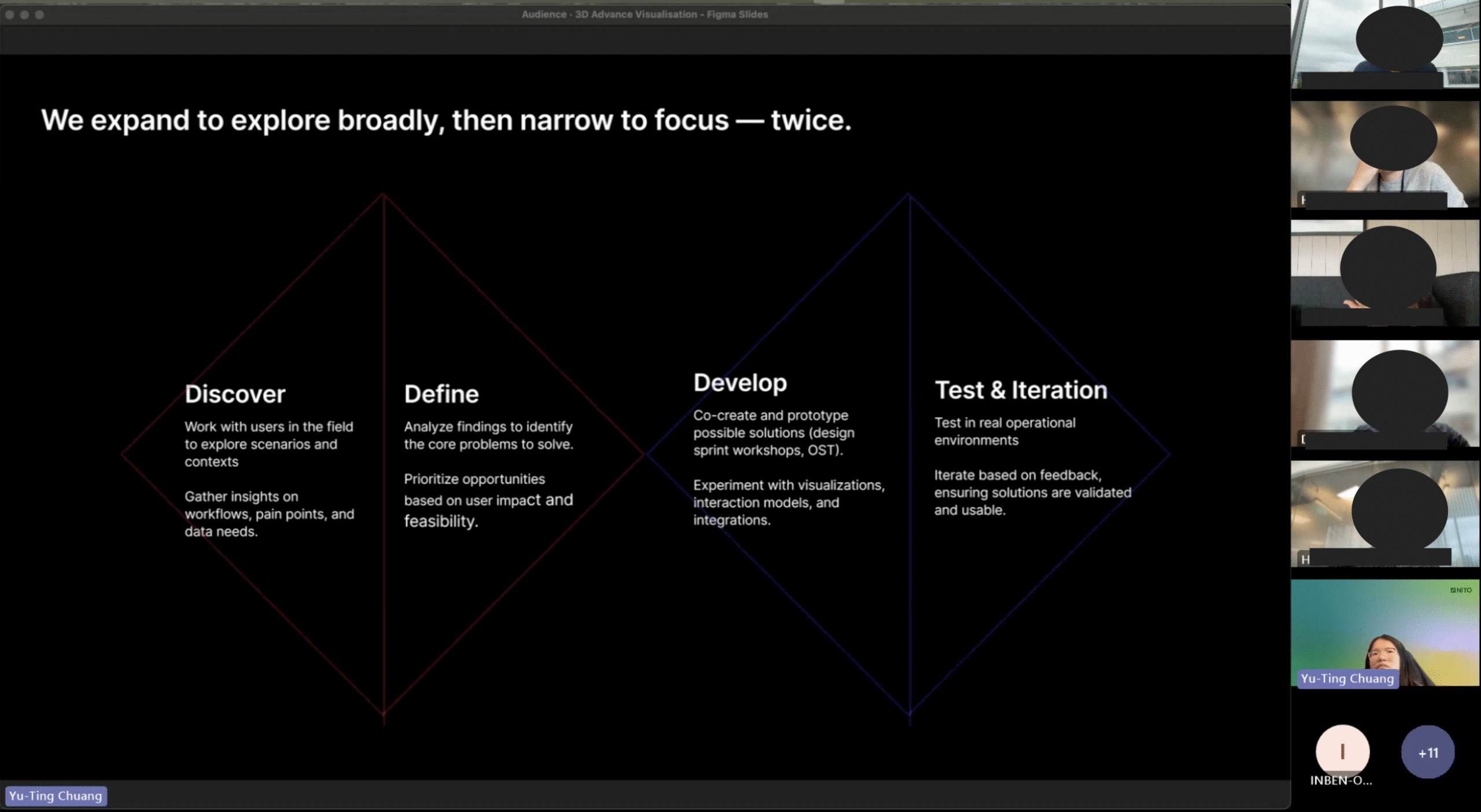
Onboarding UX — Speaking for Complex Systems
Since joining the visualization platform team in 2023, I’ve taken on a new role — helping new colleagues understand how visualization integrates into our digital-twin platform, and how UX thinking shapes design decisions from the earliest stages of development.
To support this, I created and hosted an internal onboarding session called “Onboarding Visualization UX.” The goal was to make complex product knowledge approachable while showing how UX connects people, tools, and business value.
The session began with an icebreaker, where I invited participants to reflect on the question, “What do you think about UX?” — encouraging open dialogue before moving into system structure and workflows. From there, I guided the group through key topics:
-
Balancing needs and constraints — finding the sweet spot between user value, business priorities, and technical feasibility.
-
Design architecture — how global and contextual toolbars shape workflows in a multi-layered visualization system.
-
Evolving process — explaining how our UX practices have matured to align with modern product foundations.
-
Applied UX principles — using illustrative examples to show how interface components support clarity and navigation.
The participants — designers, developers, and engineers new to the platform — left with a clearer understanding of how UX underpins the larger visualization ecosystem. For me, it reinforced one of my core beliefs: that public speaking in design isn’t about performance; it’s about building shared understanding.
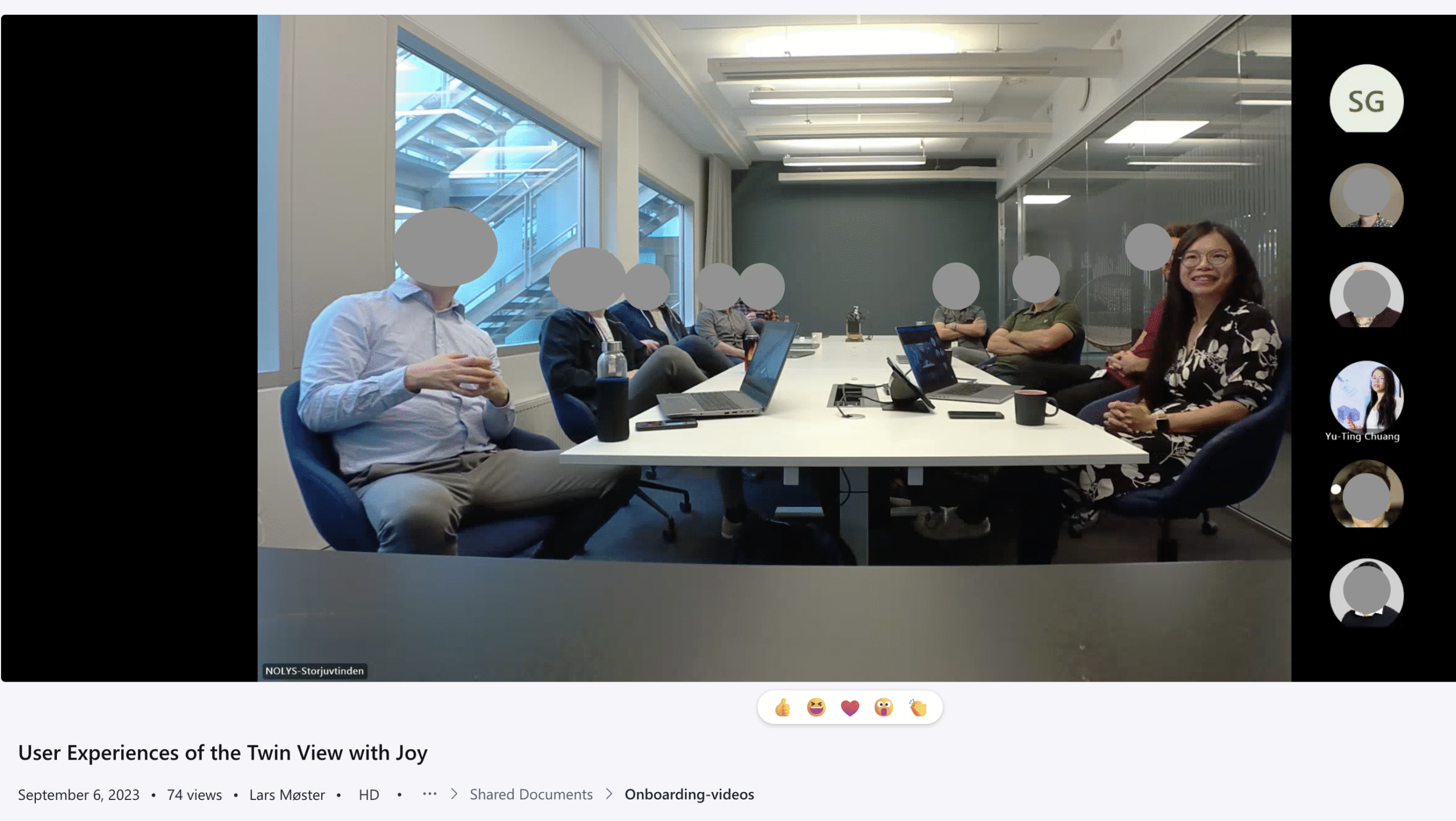
Culture — Taiwanese Lunar New Year Talk
Not all my talks were about design.
When I presented “Lunar New Year in Taiwan” at our company’s Breakfast Club, it was deeply personal — a way to share where I come from and what I value.
I walked my colleagues through the colors, rituals, and humor of Taiwanese New Year — from the family reunion dinner to the playful tradition of Wěi Yá, where a chicken head can (half-jokingly) decide who gets fired.
It was both funny and meaningful. For the first time, I saw how storytelling could connect people beyond roles or titles. The talk became a small celebration of diversity — and a reminder that culture itself is a design language.
What these talks taught me
Every talk — whether about design process, AI tools, or culture — pushed me beyond my natural comfort zone.
And with each one, I discovered that my quiet personality was actually my strength. It helps me listen deeply, prepare thoughtfully, and speak with intention rather than volume.
Here’s what I’ve learned along the way:
• Clarity builds trust. When you simplify complexity, people lean in.
• Vulnerability connects. Admitting uncertainty invites real collaboration.
• Storytelling inspires action. When people feel the “why,” they move toward the “how.”
Looking Forward
Public speaking began as my personal challenge — something I never thought I’d enjoy.
Now, it’s one of my favorite parts of being a designer. It’s how I build bridges across disciplines, cultures, and technologies.
As I continue to speak about AI in design, complex system UX, and cross-cultural communication, my goal isn’t just to present ,it’s to make people see, think, and feel together.
Because design isn’t just about creating products — it’s about creating understanding.
And sometimes, the most powerful way to design understanding is simply to stand up and share your voice.

Object-Oriented UX (OOUX) for digital twins: insights to support scalable 3D view

Making 3D usable: OOUX finding from isolate & highlight features
Design insights: how users interact with Split Screen in digital twin

Designing SaaS for digital twin: how discovery shaped the solution
(47) 41 33 16 51
Reach Me By Phone
Email Me
Rølivegen 367, Steinkjer, 7718, Trøndelag
📍 Based in Norway